GRA Blogs

Articles by Team Leaders.

Residential rental property and depreciation

2431

Depreciation is the reduction in value of an asset over time due to wear and tear. In New Zealand, the Inland Revenue Department (IRD) allows depreciation on certain items to be claimed as a type of expense for income tax, so it is beneficial to understand what it can be applied to. 

In accountancy, depreciation refers to two aspects of the same concept: 
1. The decrease in value of assets 
2. The allocation of the cost of assets to periods in which the assets are used 

Depreciation is a method of reallocating the cost of a tangible asset over its life span. So if, for example, a depreciable asset cost you $1,500 and its life span is 10 years, you can claim depreciation on a straight line basis of $150 per year as an expense.

As far as property investors are concerned, residential rental properties are made up of three items: land, buildings and chattels. Land cannot be depreciated. Buildings and chattels, on the other hand, can be.

Building Depreciation 
Buildings are depreciable assets. However, since 1st April 2011 the IRD does not allow you to claim depreciation on buildings with an estimated life of 50 years or more. This safely covers all the standard rental properties. So, as a property investor, it is important to consider chattels depreciation.

Chattels depreciation
Any item that is separate to the building should be considered a chattel and depreciable. To determine what is considered to be a depreciable chattel, consider the following:
1. If the item is not attached to the building, then it can be depreciated separately.
2. If the item is an integral part of or firmly attached to the building, then it is considered to be a part of the building and cannot be depreciated.

In 2011, the IRD released a list of items that qualify as chattels and are, therefore, depreciable. The list includes things like appliances, drapes, furniture etc. 

Chattels useful life
Depreciation is an allowance for the reduction in the value of an asset over its lifetime. Each chattel has its own economic life and can be depreciated separately. Some assets may be depreciated over 3 years, others over 12.5. 

The IRD provides depreciation rates to use for each chattel type. What it does not give you is the cost value.

Identifying the cost
To maximise your depreciation deductions and to reduce tax at the end of the year, you need to accurately identify the cost of each chattel. 

1. Brand new asset 
If you have purchased a new chattel, then the cost will be easy to identify. The cost will be the price paid.

2. Purchasing a property with existing chattels 
If you have purchased an existing property, then it is probable you have gained many assets, such as blinds, carpets, TV aerials, air conditioners etc. 

To accurately work out the cost of the depreciable assets, it is advisable to use a professional chattel valuation expert. A chattel valuation normally costs circa $500, and the benefit of a professional chattel valuation is likely to outweigh the cost. 

The valuer will identify the various assets that can be separated from the building structure for depreciation purposes, allocate a value and apply the correct depreciation rates as specified by IRD, which in turn maximises your depreciation claim and therefore your cash flow. You will receive a report identifying the chattels, their values and the IRD depreciation rates. 

The benefit will vary from property to property. The newer the property, the higher the value of the chattels, the more benefit there is likely to be. A valuation must be completed within six months of purchasing your rental and before you submit your tax return.

3. Purchasing an old property with outdated chattels
If you have purchased an old, run-down property, with old outdated chattels, then doing a professional valuation is probably not worth it.

Depreciation recovery
It should be noted that if you eventually sell your rental property, you may be subject to depreciation recovery if the amount of depreciation claimed exceeds the actual value at the time of sale. If this is the case, you will need to pay tax on the difference. 

Note that it is not compulsory to claim depreciation on your residential rental property chattels, but you must inform IRD if you elect not to. Otherwise, when you sell the property it will be deemed that depreciation has been claimed and you will have to pay tax on that amount. Of course, as mentioned above, for most property investors we believe it is worth claiming depreciation. 
Comments

Add a Comment

Log in or sign up to post a comment

Testimonials
Hi Salesh, I just wanted to send you an email on behalf of GRA to say how fantastic we have found your company to date. As you know, Ben and I joined GRA a couple of months ago and have just found you so amazingly helpful in getting our new property set up correctly and sorted out. We have what I would consider a rather complicated structure as a result and it’s a fantastic feeling to know that we are getting everything done in the best way possible. We have just had approval to put a minor dwelling on the property which will make a massive difference in terms of cash flow and obviously value, something we would never have even thought of without GRA and which we are very excited about. During the buying process we attended a seminar with Matthew and from the outset thought he was fab. We therein signed up for property school and found this nothing short of fantastic. The content was relevant, up to date and comprehensive, but more importantly it was taught in a way that we could actually understand and really get value out of. I wanted to mention also, that everybody GRA have recommended to us has been just so efficient and absolute masters at what they do. A wonderful network of people that we feel very lucky to now be able to call on. From Kris Pederson and Bryan Rist who put our mortgage together to the insurance guys they then referred us to, I’m super impressed. Within GRA, Ellery has probably turned things around for us faster than I’ve ever known before, something which we appreciated so very much when it came to crunch time. She’s always a pleasure to deal with and again, we’re stoked. We’ve just settled on the property today and are about to go and get the keys. I’m pretty pumped and hence this email is probably rather excitable. So, a massive thank you to you Salesh, the partners for such a fabulous 6 weeks at property school and everyone at GRA for their help. May this be the start of our property empire. Thanks again, - A & B - July 2015

logo

Seminars and workshops for property investors, business owners and anyone seeking to create and protect their wealth.

View all our upcoming events
Learn More

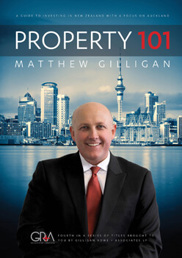
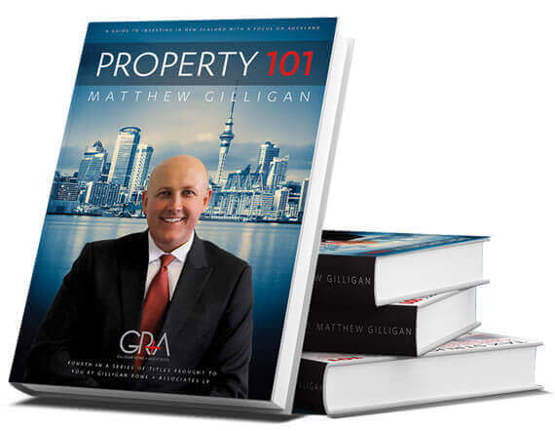
Property 101by

Investing in residential property?

Put this at the top of your reading list.


If you're investing in residential property, seeking to maximise your ability to succeed and minimise risk, then this is a 'must read'.

Matthew Gilligan provides a fresh look at residential property investment from an experienced investor’s viewpoint. Written in easy to understand language and including many case studies, Matthew explains the ins and outs of successful property investment.

  • How to find the right property
  • How to negotiate successfully
  • Renovation do's & don'ts
  •  Property management 
  • Case studies and examples
  • and much, much more...
TOP