Don't Buy That! The Properties We'd Never Touch (and Why You Shouldn't Either)
6260POSTED:
463
Views

Articles by Salesh Chand.

Recently, someone asked a question that's stuck with me: what are some of the properties you would never touch?
It got me thinking, so I decided to make it the topic of a webinar. Together with Than Sundar, one of our experienced property traders and developers here at GRA, we ran a session called Don't Buy That! The Properties We'd Never Touch (and why you shouldn't either). You can watch the full recording here or at the bottom of this blog.
In short: In the webinar, Than and I break down the property types, locations, and financial red flags we personally avoid as investors – including dense social housing streets, leasehold titles, leaky buildings, and deals that don't stack up financially or trigger unexpected GST obligations. Below is a summary of what we covered.
To be clear, this isn't us telling people not to invest in property. Far from it – we believe strongly in property as a wealth-building tool. But between our own portfolios and the clients we work with, Than and I have seen just about every mistake there is to make, and the whole point of this webinar is passing that knowledge on so you don't have to learn it the hard way.
As well as being a chartered accountant and partner here at GRA, I've been an active property investor for close to two decades. Today my portfolio sits at over 80 properties, with 18 more currently under construction. I buy and hold for long-term growth and cashflow, I trade properties for profit, and I land bank (buying houses with big, developable land in the right areas – these properties increase in value more over time than properties that can't be developed).
Than brings a different but complementary lens – he's out on the road daily, project managing renovations and developments, and helping clients with due diligence, feasibility studies, and the numbers behind a purchase.
Between us, we've made our share of mistakes over the years too, as well as observing mistakes clients and other investors have made. That's really the point of this webinar: passing on what we've learned so you don't have to learn it the hard way.
The first principle of buying any property is simple: don't lose money. That means doing your due diligence on both the property and the area, and it means not relying on a single opinion.
Get your lawyer's view, but also talk to local agents and consultants who know the streets. And whatever you do, get your insurance checked before you go unconditional. If a property has an issue that means you can't insure it, you need to know that before you're committed, not after.
For everyday investors – I'm talking teachers, nurses, dual-income households – the rule I stick to is multi-income, cashflow-positive properties. Avoid cashflow-negative deals unless you're on a high income and can genuinely absorb the shortfall, and the deal is exceptional enough to justify it for the capital growth down the track.
I showed a couple of examples from my own portfolio during the webinar – properties purchased years ago for cashflow that have since paid themselves off, in one case twice over.
Not every suburb is worth your money. Before you buy, I look at:
Wellington was a good case study for this. Public sector job losses have hit rents hard there, but with prices down 30–40%, I actually think it's one of the better buying windows right now for investors who can hold long-term.
One shift I'm seeing everywhere is a move toward smaller homes – one and two bedrooms, low-maintenance sections, no lawns to mow. It's not just singles either; families are increasingly choosing townhouses over big sections.
If you're buying to rent or resell, understanding this shift in what buyers and tenants actually want will shape which stock moves and which doesn't.
This isn't a problem with the tenants; I've rented to social housing tenants for 16 years without issue. The risk is when a whole street is concentrated with social housing – it only takes one tenant going rogue to make the area unpleasant to live in, and then you lose your good tenants. If you buy in these areas, buy for cashflow only, not capital growth, as property values tend to increase less and more slowly than elsewhere.
I tell every GRA client the same thing: don't buy leasehold, no matter how good the deal looks. You're buying the building, not the land, and ground rent typically resets against land value every 21 years. I shared a real example where land rent jumped from $10,000 to $92,500 a year once the lease reset, leaving the owner unable to even give the property away.
This isn't limited to monolithic cladding. Weatherboard, concrete, and plaster homes from certain build periods (particularly the late 1980s through mid-2000s) all carry risk if the cavity system wasn't installed properly. The real test is insurance: if you can't insure it, no bank will lend on it either. On top of that, leaky buildings are notoriously costly to fix.
Not knowing how to financially analyse a deal (or knowing how, but not doing it) can result in you buying a property that sends you backwards. We walked through a live example of an $850,000 terrace house that looked appealing on the surface, but once you strip out operating costs and interest, would leave an investor topping up around $312 a week after tax. That's a property far better suited to an owner-occupier than an investor, and it illustrates how important it is to do your numbers properly before you buy.
My rule is straightforward: don't buy negative cashflow unless you can genuinely afford it, and the upside (long-term capital growth) is exceptional.
I'm seeing buyers get caught out here more than they should. Buying from a GST-registered seller, or changing a property's use from long-term hold to build-to-sell, can create unexpected and very expensive GST obligations if you don't get advice first. It's costly to get wrong – get a second opinion if you're unsure.
If you'd like help thinking through your own property strategy, check out our website – we've got plenty of free resources, including videos on property, tax and related topics, and our Property School course. If you'd like to talk to us directly, fill out our online form and we'll get a meeting arranged.
Got a topic you'd like us to tackle in a future webinar? Send us your ideas – we read every suggestion, and it's exactly how sessions like this one come about. [email protected]
This article only scratches the surface. The full session runs a bit over an hour and includes all the live numbers, examples, and the Q&A session. If you're actively investing, or thinking about it, I'd recommend setting aside the time to watch it in full.
Generally no. With leasehold, you own the building but not the land, and ground rent is typically reviewed against land value every 21 years. This can lead to a sharp increase in outgoings and make the property very difficult to sell or refinance.


I would like to express my gratitude for taking the time to meet with me today. It's always a pleasure to connect with a knowledgeable and talented consultant like yourself. Our conversation was truly enjoyable, and the overview you provided was exactly what I've been looking for.
- CH, August 2023
Investing in residential property?
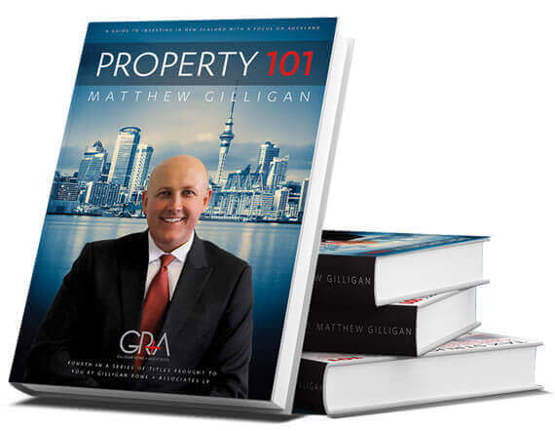
If you're investing in residential property, seeking to maximise your ability to succeed and minimise risk, then this is a 'must read'.
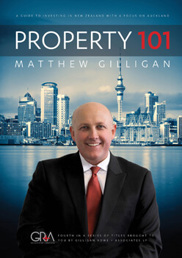
Matthew Gilligan provides a fresh look at residential property investment from an experienced investor’s viewpoint. Written in easy to understand language and including many case studies, Matthew explains the ins and outs of successful property investment.






 Free Resources, Tools & Downloads