Changes to boarding service rules
2432POSTED:
43
Views

Over the years I have had wide-ranging conversations with clients about boarding services and how to qualify. The reason people wish to qualify as providing a boarding service is if the amount of income you receive falls below either the “weekly standard-cost” threshold or the “annual housing standard-cost” threshold, then the income is exempt from tax, i.e. it does not need to be reported to the IRD.
From April 1 2019, this threshold was lowered, so it is harder to qualify.
There are several ways to work out whether you qualify for the exemption.
If the annual income received from boarders is less than the annual standard housing cost amount, then you can treat it as exempt income. There is a worked example below to illustrate.
3. Income and expenses calculation
As an alternative to using either the $186 standard weekly cost or the annual housing standard cost, you can choose to do an actual calculation of income and expenses.
Example of Annual Housing Standard-Cost calculation
Three boarders paid $200 per week for 39 weeks = $23,400. Therefore, as the income from boarders is more than $186 per week, you can either (a) treat the excess as taxable or (b) see if you fall below the annual housing standard-cost threshold.
Method (a) = 3 x $186 x 39 = $21,762 - $23,400 = $1,638 of taxable income.
Method (b): Annual Housing Standard-Cost
• “a” cost of house including improvements = $450,500 x 4% = $18,020
• “b” total accommodation supplement (from WINZ) = $0
• “c” number of boarders = 3, and the number of occupants = 5, as a percentage = 60%
• “d” number of full weeks which the boarding services were provided = 52 divided by 52 = 100%.
($18,020 - $0) x 60% x 100% = $10,812.
As method (b) is more than the weekly standard cost, then choose (a) above or choose to do an actual calculation of income and expenses.
Conclusion
The key thing here is you need to be careful in classifying occupants in your house. The IRD are getting increasingly specific on what exactly the provision of boarding services are. The drop in the standard cost from $270 per week for the first two boarders and third and fourth boarder being $222 each, to $186 per week across up to four boarders, is a significant decrease that may catch out some people.
Please contact us for further information about boarding services by phoning +64 9 522 7955, emailing [email protected] or by filling out the online form.
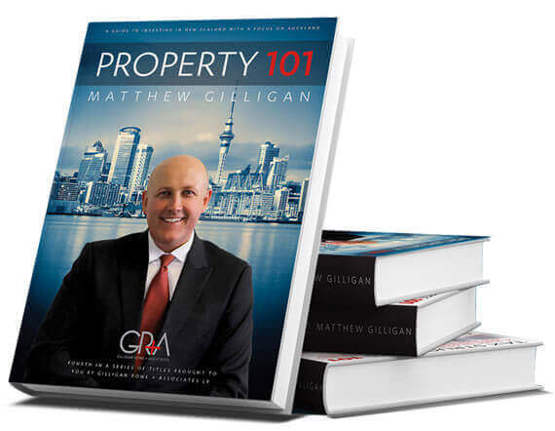
Hi Matthew, my name is Mark Soster and I would just like to congratulate you on your wonderful book Property 101. A few weeks ago I had a "financial awakening" and began devouring all the books I could find on the subject, however I keep coming back to yours. After 3 reissues from the library I think it easier now just to buy it. Wonderfully simple yet complex enough to require multiple reads and note taking. It has taken a lot of the fear away with regards to property investment but also tempered me with caution. Without it I would probably have stupidly invested anywhere but Auckland, telling myself it’s too expensive, I now appreciate why would you invest anywhere else? The numbers never lie, in a 20 year plan then Auckland is King for capital gain. As a fan of maths (the only perfect thing on earth?) I can see how each opportunity can be ruthlessly examined on a purely financial level. Anyway, thanks again, I will definitely be contacting your company with regards to coaching and expertise. - Mark Soster - October 2017
Investing in residential property?
If you're investing in residential property, seeking to maximise your ability to succeed and minimise risk, then this is a 'must read'.
Matthew Gilligan provides a fresh look at residential property investment from an experienced investor’s viewpoint. Written in easy to understand language and including many case studies, Matthew explains the ins and outs of successful property investment.









 Free Resources, Tools & Downloads