Update for Airbnb owners who are not GST registered
5877POSTED:
882
Views

Articles by Anthony Strevens.

In November 2023 I wrote a blog about the new GST rules being applied for Airbnb properties listed through online marketplaces. You can find this here.
There has since been an update to this that will make life marginally simpler for those owners who are not GST registered. In my blog I described the “flat-rate credit”, which is the 8.5% amount that will be paid by online marketplaces such as Airbnb to non-registered owners. I also described the tax effect of this credit as follows:
Do I have to pay income tax on the $17 flat-rate credit?
No, you do not. The $17 flat-rate credit is not taxable income. The catch is that a full deduction cannot be claimed for the GST inclusive costs associated with the short-term stay activity.
For example, if you spend $2,300 on property insurance, up until now you would have claimed a deduction for income tax purposes as a non-GST registered owner on the GST inclusive cost of $2,300. Under the flat-rate credit scheme, your deduction for income tax purposes is based on the GST exclusive amount. With GST at 15% the calculation is $2,300 / 1.15 = $2,000. (You claim $2000, not $2300 for income tax.)
The update is that you will now have the option to choose to include your flat rate credit as taxable income. If you do so, then you can claim the GST on your expenses as a tax deduction. So in the above example you would claim $2,300 as the insurance expense.
This may or may not work out in your favour depending on whether the GST you have paid on your expenses is greater than the flat rate credits you have received. However, it certainly makes the accounting and tax calculations much simpler for non-registered owners.
It’s important to note that while this is not yet passed into law, there is no indication that it would not be, and as per usual GRA are ahead of the game and bringing you the future of property investment before it arrives. If passed, it is effective from 1 April 2024 (i.e. the 2025 financial year).
If you have any questions about this please contact your GRA CSM, or if you are not a client, request a meeting to see how we can help (the first meeting is free to new clients).
No – the flat-rate credit (8.5% of the booking amount) is not taxable income for non-GST-registered owners.


Very informative, a great learning journey. If you are serious about property, or thinking about investing in property, then Property School is a must. - Name withheld

Investing in residential property?
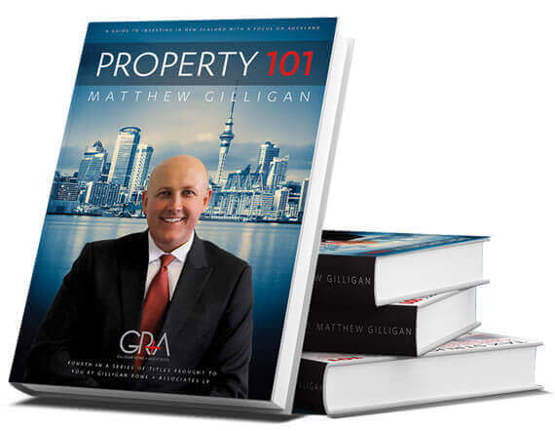
If you're investing in residential property, seeking to maximise your ability to succeed and minimise risk, then this is a 'must read'.
Matthew Gilligan provides a fresh look at residential property investment from an experienced investor’s viewpoint. Written in easy to understand language and including many case studies, Matthew explains the ins and outs of successful property investment.









 Free Resources, Tools & Downloads