Unitary Plan Tax Surprise
2468POSTED:

Articles by John Rowe.

Part of the Auckland Unitary plan addresses Auckland's housing affordability and supply. You'd need to have been living under a rock or in the far reaches of Siberia not to have heard that Auckland has a desperate shortage of affordable housing, as well as a rapidly growing population.
To address this issue, the Council plans to re-zone certain areas to allow for intensification. This is all well and good, but it seems they're also proposing to add a kicker - a "value uplift levy" or "betterment tax", which in essence is a poorly disguised capital gains tax.
The Council's surprise tax
Properties in areas that are zoned for intensification are expected to experience an increase in value. Under the proposed plan, as from 2016 if you make a capital gain when you sell such a property, you may have to pay a levy or value uplift on it, depending on how long you've owned it and who you sell it to.
The levy will apply if:
• You have owned the property for less than 10 years.
• The zoning changes would allow extra homes to be built on the property.
• More than 20% of the gain you make is due to zoning changes.
• You sell to someone who plans to build extra dwellings on it e.g. a developer.
The tax won't apply if you sell to another person who is going to:
• use the property as their place of residence or
• use it as farm land.
The extra surprise
Even if you sell before 2016, you could be surprised with a tax bill if it is determined that the gain was due to the proposed zone changes, despite them not yet having taken effect. The Council's reasoning behind this is that simply talking about re-zoning and potential value increases can push property prices up.
Issues
The idea behind a "betterment tax" is to help fund affordable housing and/or the added infrastructure Auckland will need. However, there are some hurdles to overcome before a betterment levy could be imposed, as stated in the Auckland Council's Housing Action Plan, December 2012.
• A betterment levy is not possible under current legislation.
• Overseas experience suggests that it is difficult to administer
• Complexity of calculating the increase in value.
In the Housing Action Plan, a suggested alternative to a betterment levy could be targeted rates, but a full analysis of this option has not yet been completed.
The proposal for a betterment levy is included in the addendum to the Auckland Unitary Plan, and you can still have your say about it until the end of May 2013.
If the Council goes ahead with the betterment levy, remember that forewarned is forearmed, so the main thing would be to realise that you could be stung with a type of capital gains tax when you sell. Take this into account, along with all the other costs involved with selling your property, so you are clear about what you will end up with in your hand at the end of the day.


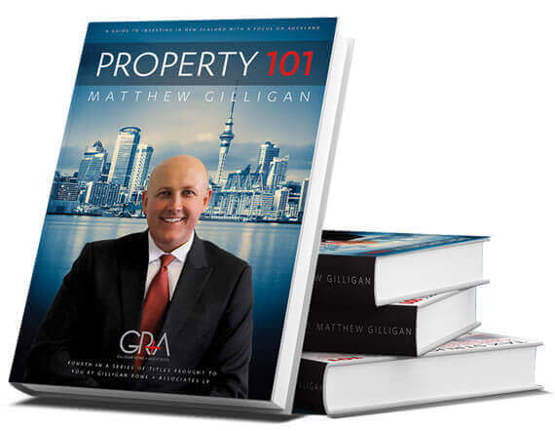
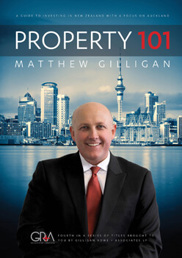
Hi Matthew, my name is Mark Soster and I would just like to congratulate you on your wonderful book Property 101. A few weeks ago I had a "financial awakening" and began devouring all the books I could find on the subject, however I keep coming back to yours. After 3 reissues from the library I think it easier now just to buy it. Wonderfully simple yet complex enough to require multiple reads and note taking. It has taken a lot of the fear away with regards to property investment but also tempered me with caution. Without it I would probably have stupidly invested anywhere but Auckland, telling myself it’s too expensive, I now appreciate why would you invest anywhere else? The numbers never lie, in a 20 year plan then Auckland is King for capital gain. As a fan of maths (the only perfect thing on earth?) I can see how each opportunity can be ruthlessly examined on a purely financial level. Anyway, thanks again, I will definitely be contacting your company with regards to coaching and expertise. - Mark Soster - October 2017

Investing in residential property?
If you're investing in residential property, seeking to maximise your ability to succeed and minimise risk, then this is a 'must read'.
Matthew Gilligan provides a fresh look at residential property investment from an experienced investor’s viewpoint. Written in easy to understand language and including many case studies, Matthew explains the ins and outs of successful property investment.








 Free Resources, Tools & Downloads