What Every NZ Property Investor Needs to Know Right Now
6250POSTED:
4661
Views

Articles by Salesh Chand.

On 12 May I hosted a Frank Discusson about the Property Market webinar with Kris Pedersen (founder of KPM Mortgages), and Than Sundar (experienced property trader and developer). Over the session, we covered interest rates, bank lending, risk management, and where the market is actually moving.
Below are the main points we covered. You can watch the full recording here, or at the bottom of this blog.
After the Reserve Bank aggressively cut interest rates through 2024 and into 2025, things were looking up. Mortgage rates had come off their peak and investor confidence was returning.
Then came the Iran oil shock.
Inflation, which sat at 3.1% for December 2025, is now forecast to hit 4.2% by June 2026 – well above the Reserve Bank's 1–3% mandate. Rate hikes are expected as early as December 2026.
The key risk to understand is the difference between a one-off supply shock and entrenched inflation. The immediate hit – petrol prices jumping by roughly $50–55 per week for the average family – is painful, but the Reserve Bank can look past a singular event. What they're watching for is a wage spiral: workers demanding higher pay to cover rising costs, employers raising prices in response, and inflation becoming self-reinforcing.
If the ceasefire holds and oil supply stabilises, New Zealand may dodge the worst of it. If the situation drags on into 2027, the Reserve Bank will have to act, and interest rate direction is almost entirely tied to how that plays out.
Given the uncertainty, the session's key recommendation for most people carrying meaningful mortgage debt is hedging across multiple fixed terms rather than betting everything on one outcome. Locking in short means exposure if rates rise; locking in long means potential break fees if the situation resolves and rates fall back.
The two-to-three-year range offers a reasonable balance of certainty without overcommitting. For anyone with loans coming off a fixed term in the next few months, it's worth getting a break fee analysis done now because sometimes the cost of breaking early is justified to lock in certainty before rates move.
One important dynamic to watch: business confidence has already taken a noticeable hit, even before rates move. If that dampens economic growth enough, it could actually reduce inflationary pressure, meaning the Reserve Bank may not need to hike as aggressively as currently signalled.
Broadly, banks haven't significantly tightened lending criteria in response to global uncertainty – yet. Lending into the investment space has actually increased considerably over the past year.
That said, certain industries are under closer scrutiny. Construction has seen the highest rate of liquidations of any sector, and income volatility in fields like real estate means banks are asking harder questions about earnings consistency. If your income has been up and down over the last few years, having clean, up-to-date financials ready, including draft or final accounts, is more important than ever.
On the regulatory side, debt-to-Income (DTI) rules introduced in July 2024 cap lending at six times gross household income for owner-occupied properties and seven times for investment properties. In practice, banks' own affordability checks have been more restrictive than the DTI limits, so they haven't been a major constraint yet, but they're expected to bite more in higher-priced markets like Auckland and Wellington as the market recovers.
LVR rules remain in place, with most investment lending for existing properties capped at 70%. However, one bank has recently begun offering 80% lending in certain circumstances. This creates a restructuring opportunity whereby it may be possible to move investment debt to 80%, pull equity back into the family home, and maximise interest deductibility. At a 39% tax rate, $100 of interest effectively costs only $61 after the deduction. It's a meaningful difference across a large portfolio.
For larger investors hitting walls at retail or business banking, commercial banking is increasingly worth exploring. Commercial bankers assess a portfolio on interest coverage ratios rather than personal expenditure – a very different and often more favourable lens for high-net-worth investors.
Non-bank lending is also growing as an option, with new products entering the market that offer lower rates and longer terms (including 25-year terms) compared to traditional non-bank financing.
The session covered several practical approaches to protecting a portfolio in a volatile environment.
Get your structure right before you buy. Using separate companies and trusts for different properties or developments means a problem in one investment doesn't threaten the rest. The critical point: get this sorted before going unconditional, not after. Restructuring once a deal is done creates unnecessary cost and stress, including for your bankers and lawyers.
Build working capital. Overdraft facilities, offset accounts, and revolving credit lines are what keep you operating when something goes wrong, e.g. a tenant damages a property, an interest rate rises unexpectedly, or a renovation blows out. Set this up before you need it.
Stress-test your position. Can you cover the mortgage if a property sits vacant for six to eight weeks? Can you absorb a 1.5% rate increase? Addressing those gaps now, with insurance, cash buffers, or adjusting your debt level, is far better than being forced to sell at the bottom of a cycle.
Know your exit options. Property investment works best as a long game, but getting too attached to individual assets can itself be a risk. Sometimes selling is the right call, and if you've bought well, you'll have enough equity to exit cleanly, free up capital, and redeploy it into something that better fits your current strategy.
A clear picture emerged of what is and isn't selling right now.
Townhouses with parking are moving well; without it, they're sitting. It's a practical issue many developers underestimate. Families don't want to park hundreds of metres from their front door.
Homes in established school zones remain in strong demand. Areas anchored by multiple schools create their own mini-economies of staff and families, which drives consistent rental demand and solid resale values.
Multi-income properties continue to perform reliably. The ability to offset one income stream against the mortgage on another is a model that works in most market conditions.
The South Island – particularly Christchurch and Southland – is where the most price growth is expected, driven by infrastructure investment, a strong agricultural sector, and a shift in tourism patterns.
New builds are likely to become more expensive over the next five to six years as construction costs (currently up around 25%) reduce the volume of new housing being built. Less supply with the same underlying demand tends to push prices up over time.
For cash-ready investors, the current environment may offer opportunity. Property investment mortgage volumes jumped 14 times in Q1 of this year compared to all of 2023. Investor activity was recovering strongly before the Iran situation created fresh uncertainty. Periods of market hesitation tend to produce motivated sellers, and that's where discounted buys happen.
Probably. The combination of easy credit, falling interest rates, and speculative buying that drove the last two decades of growth is unlikely to repeat in the same way. Political pressure to keep housing more affordable is real, and the regulatory environment reflects it.
But that's not necessarily bad news for disciplined investors. The focus shifts from waiting for market-driven price growth to creating your own equity – buying below market value, improving or developing the asset, and ensuring the numbers work even if values stay flat. That's what successful property investment looked like before the boom years, and it's what it looks like again now.
The Bottom Line
The current environment is genuinely uncertain, but uncertainty isn't the same as danger, especially for investors who are well-structured, cash-ready, and buying on fundamentals rather than hope. The biggest risks right now are being caught with the wrong mortgage strategy as rates move, holding assets in the wrong structure, or stretching too thin without working capital to absorb shocks. Get those three things right, and the market conditions that are spooking others may turn out to be exactly the kind of environment where good deals get made.
If you'd like to talk through your own situation, get in touch with the GRA team here, or contact Kris Pedersen Mortgages here.
The views expressed in this blog and the webinar are general in nature and not financial or investment advice. Speak to a suitably qualified professional before making investment decisions.
Periods of market hesitation, like the uncertainty created by global events, tend to produce motivated sellers, which can create opportunities for cash-ready investors buying on fundamentals rather than hope.


To educate you must entertain. Property School was both informative and fun. I could not have coped with a boring session after a day in the office. The things I found most valuable were learning about the property wealth wheel, the value of trusts, credit lines and Life Online (which I will use again in the future). I got a lot out of it and have already recommended Property School to friends. - Peter M - November 2015
Investing in residential property?
If you're investing in residential property, seeking to maximise your ability to succeed and minimise risk, then this is a 'must read'.
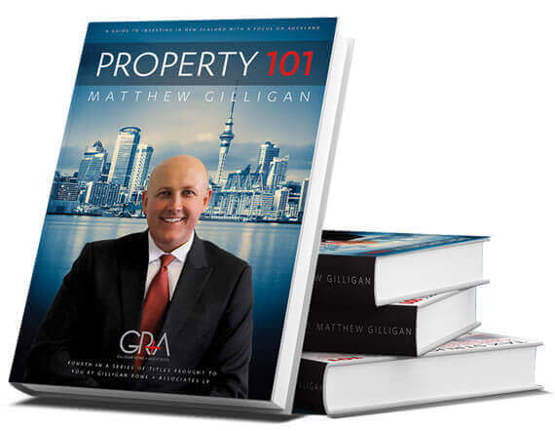
Matthew Gilligan provides a fresh look at residential property investment from an experienced investor’s viewpoint. Written in easy to understand language and including many case studies, Matthew explains the ins and outs of successful property investment.








 Free Resources, Tools & Downloads